Choose Which Site You Want To See




WDS is a supplier of window and door systems designed for residential and commercial settings.
Its range covers various frame styles and materials, allowing users to compare options suited to different building types and aesthetic preferences. Information is presented in a straightforward way that may help users assess features such as durability, insulation characteristics, and general design considerations. WDS may suit homeowners, builders, or renovators seeking a focused selection of systems without extensive customisation requirements, as well as those who prefer clear technical details when planning a project.
WDS is a name used by several organisations across different sectors, and in general usage it is often associated with companies that provide technology-led services, digital support functions, or operational solutions. Because the brand name is broad and appears in multiple contexts, the specific focus of any given WDS entity can vary. However, across these different interpretations, the name is commonly linked with organisations involved in digital operations, technical support, managed services, or platform-based solutions designed to help businesses or end users handle complex tasks with greater structure.
Where WDS refers to a company within the technology and service-solutions space, the brand typically positions itself as a provider of specialist or niche support rather than a mass‑market consumer retailer. Its work often centres around business processes, digital workflows, customer support structures, or information handling. In practice, this means users tend to approach the brand with an interest in problem‑solving, operational assistance, or accessing a structured service environment.
Some WDS-labelled organisations have been active for many years, contributing to the brand’s visibility within professional and technical circles. This continuity gives the name a degree of recognition in areas such as managed services, device support, or workflow systems, although details vary depending on which specific WDS entity is being referenced. Because of this variation, expectations should remain broad: readers can assume a practical, solutions‑oriented environment, but the exact nature of the offering depends on the particular branch of the brand under discussion.
This review provides an editorial overview of WDS as it is broadly understood within its sector. It aims to help readers form a clearer impression of the brand’s purpose, positioning, and the type of user experience that may be associated with it, without making assumptions about any single corporate entity behind the shared name.
Browse the full range on the WDS website.
The following categories reflect commonly referenced areas associated with brands operating under the WDS name. As naming overlaps across different organisations, not all categories apply universally, but they align with widely recognised WDS‑related services.
This category typically includes structured support tools, helpdesk-style systems, and resources designed to assist users with technical issues. These solutions often emphasise clarity, guided resolution processes, and consistent communication, reflecting a specialist rather than mass‑market orientation.
Some WDS entities are associated with managed service environments where operational tasks are handled through outsourced or semi‑outsourced structures. These services often involve monitoring, administrative support, or digital task management for organisations seeking predictable ongoing assistance.
Certain interpretations of WDS link the name to systems that support customer communication or experience management. Typical components include ticketing structures, user guidance frameworks, and service pathways that enhance the consistency of user interactions.
Another area associated with WDS in some contexts involves device troubleshooting, operational guidance, or structured documentation for hardware-related queries. This often appeals to users seeking predictable outcomes through defined support stages.
In some sectors, WDS appears in connection with workflow or process-design tools. These platforms typically enable teams to structure their tasks, improve efficiency, or maintain consistency across operational procedures, aligned with the brand’s solutions-focused positioning.
While not universal, certain WDS-labelled organisations offer sector-specific advisory services. These typically focus on operational or technical domains rather than financial or regulated advice, reflecting an applied, process-oriented approach.
Some interpretations of WDS include educational or resource‑based content, often aimed at helping users understand systems, tools, or workflows more clearly.
In several contexts, WDS is linked to platforms that monitor activity, performance, or system status. These tools typically appeal to businesses looking for reliability in day-to-day operations.
Certain WDS organisations offer structured documentation or knowledge‑base systems. These aim to centralise information so that users can access consistent guidance when handling technical or operational tasks.
WDS, in its various industry interpretations, typically positions itself as a practical and solutions‑driven provider. Its focus often lies in structured support frameworks, which can include detailed processes, clear guidance, and predictable service pathways. This is especially evident in technology and operational environments where consistency is valued.
Because WDS-branded organisations frequently work with systemised or workflow-based tools, their approach can be described as methodical. This gives WDS a more functional identity compared with consumer-facing brands.
Overall, the brand’s broader positioning reflects specialist or semi-specialist services aimed at users who prefer structured systems over informal or ad‑hoc solutions.
The user experience associated with WDS often centres on clarity and task orientation. Information is typically presented in a structured, accessible format, sometimes resembling professional or technical documentation.
Navigation through WDS-related platforms or services tends to focus on guiding users toward solutions rather than lifestyle content. Users may encounter step-by-step pathways, categorised resources, or streamlined onboarding designed to minimise uncertainty. The overall impression is usually one of functional organisation rather than visual flair.
WDS is generally known for structured, solutions‑oriented services across technical and operational contexts. The specifics vary due to the name being used by multiple organisations, but clarity and systemised support are recurring themes. Many users recognise the brand for its predictable processes and professional presentation.
WDS typically operates through structured frameworks designed to guide users through tasks or support needs. This may include workflow systems, documentation, support pathways, or managed service environments. The exact operation depends on the specific WDS entity, but a consistent emphasis on organisation is common.
WDS services are generally used by individuals or organisations seeking clear operational structures. This can include businesses that rely on technological tools, users looking for predictable support environments, or teams managing process-oriented tasks. Suitability varies depending on which WDS service area is involved.
WDS may be suitable for users who prefer organised, system‑based environments. It may be less aligned with those seeking casual, lifestyle‑driven platforms. Suitability ultimately depends on the user’s needs, the relevant service category, and the specific WDS organisation involved.
WDS often distinguishes itself through structure and clarity compared to more flexible or consumer‑oriented alternatives. Alternatives may offer broader versatility or visual emphasis, while WDS tends to provide process‑driven systems better suited to methodical tasks. Comparisons vary across sectors.
Users should be aware that WDS is a shared brand name and offerings differ across contexts. It is helpful to understand which specific WDS entity they are engaging with and what type of service it provides. Most WDS interpretations emphasise structured processes, so users can expect a functional, task‑oriented experience.
WDS is a broad brand name that appears across several professional and technical sectors, most commonly linked with structured service environments, workflow support, and operational clarity. While the exact nature of the brand varies depending on the specific organisation using the name, users can generally expect a practical approach focused on predictable processes rather than consumer‑driven design.
This review highlights the recurring characteristics and themes associated with WDS across these varied contexts. The brand often positions itself as a specialist or semi‑specialist provider with an emphasis on frameworks, documentation, and structured user pathways. This positions it in contrast to more flexible or visually led alternatives, offering a dependable environment for those who prefer clarity and organisation.
Because WDS can refer to different entities, users benefit from verifying which specific version of the brand they are engaging with. Even so, the shared traits described here provide a helpful starting point for understanding how WDS‑related services typically operate and what kind of experience they commonly deliver. As long as expectations are based on the structured and solution-focused nature of the brand, most users will find WDS straightforward to interpret within its respective sector.
Ready to shop? See the full range on the WDS website.
This guide was written by AI. It does not represent the views or opinions of the website owner.
Updated October 2026

Millet Grepon Wds Light Jacket: Softshell Jacket / Suitable for: Men / Weather Protection: Impregnated, Water Resistant, Windproof / Properties:...

Millet Lady Grepon Wds Light Hoodie: Softshell Jacket / Suitable for: Ladies / Weather Protection: Impregnated, Water Resistant, Windproof / Properties:...
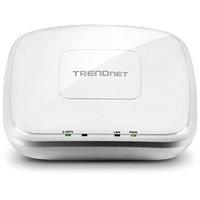
Trendnet N300 Poe Access Point (with Software Controller): TRENDnet’s high performance N300 PoE Access Point, model TEW-755AP, supports Access Point (AP), Client, Wireless...

Trendnet Tew-815dap Ac1750 Dual Band Wireless Access Point: .rpd-row { overflow:hidden; padding:30px 0; border-bottom: 1px solid #eee; } .rpd-row img { max-width:100%; } .rpd-left...

Trendnet Tew-753dap - N600 Dual Band Poe Access Point: TRENDnet’s N600 Dual Band PoE Access Point, model TEW-753DAP, is a feature rich business class access point with...

Trendnet Tew-735ap - N300 High Power Poe Access Point: TRENDnet’s plenum rated business class N300 High Power PoE Access Point, model TEW-735AP, greatly increases...

Trendnet Tew-815dap Ac1750 Dual Band Wireless Access Point: .rpd-row { overflow:hidden; padding:30px 0; border-bottom: 1px solid #eee; } .rpd-row img { max-width:100%; } .rpd-left...

Trendnet Tew-753dap - N600 Dual Band Poe Access Point: TRENDnet’s N600 Dual Band PoE Access Point, model TEW-753DAP, is a feature rich business class access point with...

Trendnet Wireless N Poe Access Point: This feature rich device blends into most environments and offers access point, Wireless Distribution System (WDS), and...
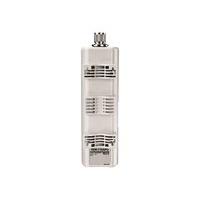
Trendnet Tew-715apo (version V1.0r) 150mbps Poe Access Point Wireless N Outdoor: Built in dual polarization directional 8dBi antenna Supports Access Point, Wireless Client, WDS, Bridge, CPE, and...
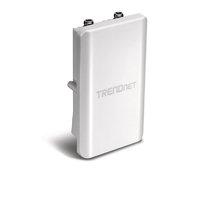
Trendnet Tew-739apbo - N300 Outdoor Poe Access Point: TRENDnet’s N300 Outdoor PoE Access Point, model TEW-739APBO, provides blanket outdoor Wireless N300 connectivity...

Trendnet Tew-738apbo - 10 Dbi Outdoor Poe Access Point: TRENDnet’s 10 dBi Outdoor PoE Access Point, model TEW-738APBO, provides Wireless N300 building-to-building...
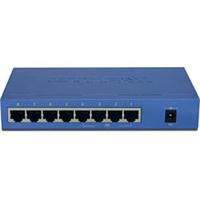
Trendnet 8-port 10/100mbps Poe Switch - 4 Poe & 4 Non-poe: TPE-S44 Wireless PoE Access Point is today\'s link to Wireless Technology. Compliant with the IEEE Wireless Networking...
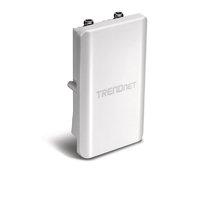
Trendnet Tew-739apbo - N300 Outdoor Poe Access Point: TRENDnet’s N300 Outdoor PoE Access Point, model TEW-739APBO, provides blanket outdoor Wireless N300 connectivity...

Trendnet Tew-738apbo - 10 Dbi Outdoor Poe Access Point: TRENDnet’s 10 dBi Outdoor PoE Access Point, model TEW-738APBO, provides Wireless N300 building-to-building...
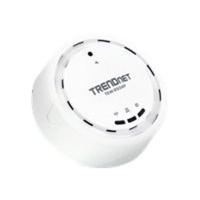
Trendnet Wireless N Poe Access Point: This feature rich device blends into most environments and offers access point, Wireless Distribution System (WDS), and...

Avm Fritz!wlan Repeater 310: Wireless Repeater / Status LED for Power, WiFi & WiFi Signal Quality / Compatible to standard WiFi-Routers (no WDS...
 Puckator
 Preworn Wholesale
 Packed Direct
 WholesaleOnline
 Alibaba
 Warco
 SureSafe
 HiVisGear